
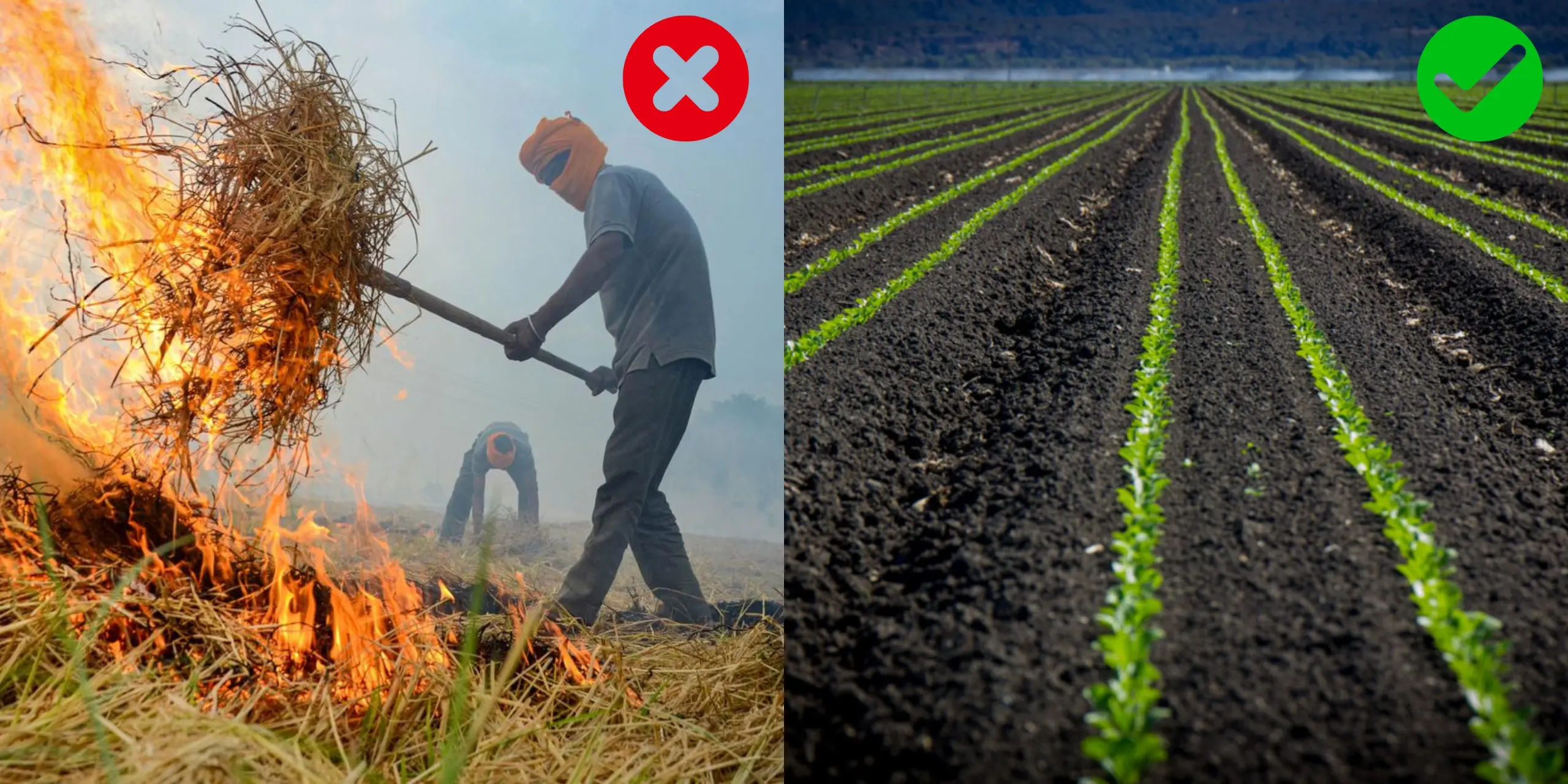
Agriculture is the backbone of India's economy, but it also generates a significant amount of crop residue, especially paddy stubble. Traditionally, farmers have resorted to burning this stubble, leading to severe environmental pollution, soil degradation, and health hazards. However, with technological advancements and sustainable solutions, farmers can now convert this waste into a profitable resource instead of letting it go up in smoke.
The Problem: Stubble Burning and Its Consequences
- Air Pollution: Stubble burning releases harmful pollutants like carbon monoxide, nitrogen oxides, and particulate matter, leading to smog and respiratory diseases.
- Soil Degradation: The heat from burning destroys essential soil microbes, reducing fertility and crop yield.
- Climate Change: The release of greenhouse gases contributes to global warming.
- Health Hazards: Increased respiratory issues, eye irritation, and cardiovascular diseases, especially in urban areas like Delhi.
The Solution: Converting Crop Residue into a Profitable Resource
Instead of burning stubble, farmers can now leverage biomass technologies to transform agricultural waste into valuable products like biogas, biochar, pellets, and briquettes. Companies like Enersol Biopower Pvt. Ltd. are pioneering innovative waste-to-energy solutions that benefit both farmers and the environment.
1. Biogas Production
Biogas plants convert crop residue into clean energy for cooking, heating, and electricity generation. The by-product, digestate, serves as an excellent organic fertilizer.
2. Biochar: Enhancing Soil Fertility
Biochar, a carbon-rich material derived from crop residue, improves soil fertility, enhances water retention, and reduces the need for chemical fertilizers. It also sequesters carbon, mitigating climate change effects.
3. Biomass Pellets and Briquettes
Crop residue can be compressed into biomass pellets and briquettes, which serve as an eco-friendly alternative to coal in industries and power plants. This creates an additional income stream for farmers.
4. Biomass Gasification for Rural Electrification
Advanced biomass gasifiers, like those developed by Enersol Biopower, convert crop waste into producer gas, which can be used for off-grid power generation, irrigation, and community electrification.
Economic Benefits for Farmers
- Earn Additional Income: Selling crop residue for biochar, pellets, or biogas can generate substantial revenue.
- Reduce Fertilizer Costs: Biochar and digestate improve soil quality, reducing dependency on expensive chemical fertilizers.
- Utilize On-Farm Energy: Biogas and biomass gasification provide affordable energy for farms, reducing reliance on costly diesel and electricity.
Government Initiatives & Support
- National Policy on Bio-Energy promoting biomass-based power generation.
- Subsidies on Biogas and Biomass Pellet Machines under various rural development programs.
- Happy Seeder and Super Straw Management System (SMS) machines at subsidized rates to manage stubble effectively.
Conclusion
The transition from stubble burning to sustainable biomass utilization is not just an environmental necessity but an economic opportunity for farmers. By embracing waste-to-energy technologies, they can turn crop residue into a valuable asset, ensuring cleaner air, healthier soil, and increased income. The future lies in harnessing the power of biomass, and with the right support and technology, we can transform India's agricultural sector into a model of sustainability.